We often treat learning a new skill or changing careers like a “Big Bang rewrite”. You remove the entire existing system and try to build a shiny new one from scratch. It almost always fails. It takes too long, costs too much, and it’s incredibly risky.
We tell ourselves: “I hate my job as an accountant. I’m going to quit, go to a coding bootcamp for six months, and become a developer!”. I’ve seen this happen time and time again, heck, this year, I’ve seen it happen to my friends. I’ve seen it happen to myself.
This is high-risk, expensive, and stressful. It’s the equivalent of leaving a long-term relationship and attempting to start a new one from scratch with someone you’re yet to meet or not even sure you’re compatible with.
There is a better way. Just like software architects use the Strangler Fig Pattern to modernize legacy systems, you can use it to modernize yourself.
What Is a Strangler Fig?
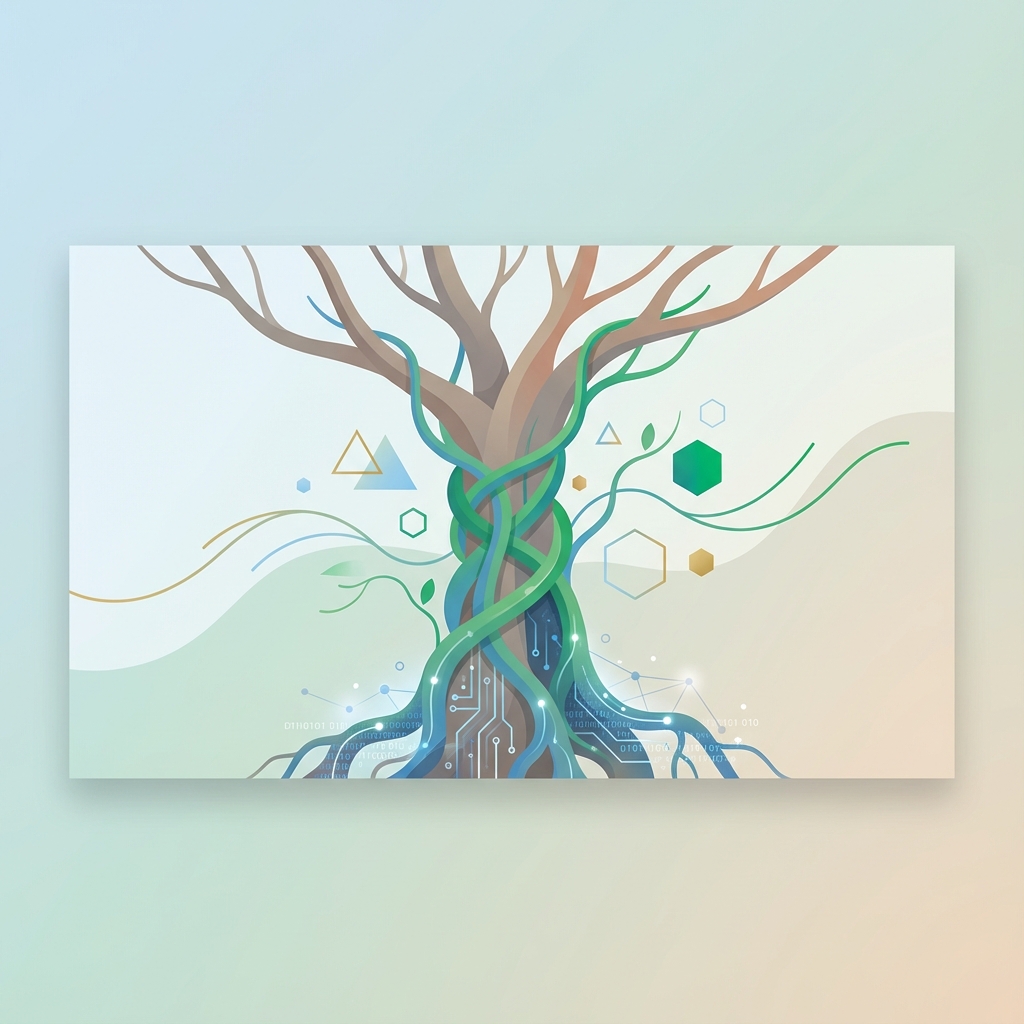
In nature, a strangler fig starts as a tiny seed dropped by a bird in the canopy of a host tree. The seed germinates high above the ground, sending roots down the trunk to reach the soil below. Over decades, these roots thicken and multiply, gradually wrapping around the host tree.
Eventually, the fig’s roots fuse together, forming a lattice that stands on its own. The original host tree, now completely enveloped, dies and decomposes, leaving behind a hollow, self-supporting strangler fig tree.
The key insight: the strangler fig doesn’t kill its host immediately. It relies on the host for support while it builds its own structure. Only when it’s strong enough to stand alone does the transition complete.
The Pattern in Software
In 2004, Martin Fowler named a software architecture pattern after this natural phenomenon. The Strangler Fig Pattern is how you modernize a legacy system without the risk of a complete rewrite:
- Identify a small piece of functionality in the old system
- Build a new version of that piece with modern technology
- Route traffic from the old system to the new one for that specific feature
- Repeat until the new system handles everything and the old one can be retired
Instead of shutting down the entire monolith to build microservices (high risk, often fails), you gradually wrap new services around it. The old system keeps working while the new one grows.
The Pattern in Your Life
The same principle applies to career transitions and skill development. You don’t need to quit your job, burn your bridges, or start from zero. You build the new skills alongside the old ones, routing increasingly complex work to your new capabilities until they’re strong enough to support you completely.
Why This Beats the “Big Bang”
Before I share my story, here’s why this approach works:
-
Lower Risk: You don’t lose your income while you learn. When your first attempts are buggy or imperfect, it doesn’t matter, you still have your day job providing stability.
-
Real Feedback: You aren’t learning in a vacuum with toy exercises. You’re building actual tools and solving real problems, which teaches you what actually matters versus what’s just theoretical.
-
Compound Growth: Each small project builds on the last. One skill makes the next easier to learn, creating a flywheel effect that accelerates your progress over time.
-
Less Burnout: You aren’t trying to change your entire identity overnight. The variety of old and new work keeps you energized instead of exhausted.
How I Applied It: Four Phases
I didn’t quit my day job to become a programming languages researcher overnight. That would have been insane. Instead, I started planting seeds while my “legacy system” (TypeScript, React, Go) kept paying the bills.
Phase 1: Plant the First Seed
It started with a YouTube video. I stumbled on a talk by Yaron Minsky about compilers and how Jane Street uses OCaml. Something clicked. I didn’t just want to use tools, I wanted to understand how they were built. I wanted to work at a place like Jane Street someday.
The problem? I was a product engineer, comfortable with React, Ruby, Go, distributed systems, but I didn’t have a deep CS background in compilers or type theory. That world felt impossibly far away.
So I did something unconventional: I enrolled in a master’s program (a lot more on this later) and chose programming language theory as my thesis topic. Not because I was already an expert—but because I wanted to become one. The thesis became my forcing function.
That curiosity became the first seed.
When I wanted to explore programming language theory, I didn’t immediately try to implement a full compiler with type inference and optimizations. I picked one tiny, isolated component: build a simple Lisp interpreter.
Why Lisp? Because the syntax is trivial, you can focus purely on evaluation semantics. I called it Swirl, and it started as just 200 lines of Rust that could evaluate (+ 1 2).
That was my first seed in the ground.
Phase 2: Route Real Work to New Skills
This is the magic step. In software, we use a “router” to send specific requests to the new system while the old system handles the rest. In your life, you are the router.
I was still doing “boring” product engineering work full-time, but I started routing small tasks through my new skills:
- When I needed a CLI tool at work, instead of reaching for Node.js, I built gurl in Rust—a colorful
curlwrapper. - When I wanted to generate my resume, I didn’t use a template. I built rcv, a Rust DSL that compiles
.rcvfiles to PDFs. - When I needed to prototype HTML layouts, I wrote cathtml—a type-safe HTML DSL in OCaml.
Each project was real work that I would have done anyway. I just routed it through the skills I wanted to develop.
I was technically a “systems programmer” for a few hours a day. The rest of the day, my product engineering skills kept the system running.
Phase 3: Deepen the Roots
Once that first tiny skill is stable, pick another. After the Lisp interpreter worked, I added:
- A REPL that runs in the terminal
- A web playground compiled to WebAssembly
- Proper error messages with source locations
But the real expansion came from my thesis. I built L-Language—a minimal functional language in Haskell with a React visualizer for understanding operational semantics. To support it, I wrote blog posts on operational semantics to teach myself by teaching others.
The thesis forced me to go deeper than hobby projects ever would. I explored formal methods, type systems, and the theory behind distributed systems. Now I was a programming languages person for about 4-5 hours a day. Right after I shut down my work laptop, I’d get to the gym for about an hour (really important part), then get home and just read papers, watch videos, and write code.
Phase 4: The Natural Transition
Over time, you keep building new capabilities and routing more work to them. My GitHub started looking less like a product engineer’s and more like a PLT researcher’s. I was drafting proposals for ICFP (none that I actually had the confidence to submit—might be a good idea to do that this year). I was reading Plotkin and Pierce. I was building type systems.
Eventually, the new “system” became more valuable than the old one. The “legacy” product engineering career served its purpose—it supported me while the new me grew strong enough to stand on its own.
The transition happened naturally, not because I forced it.
The Practical Playbook
Here’s exactly how you can start your own strangler fig transformation:
| Week | Action |
|---|---|
| 1-4 | Read one paper/article per week during commute |
| 5-8 | Build the smallest possible working example |
| 9-12 | Rebuild a real work tool using the new skill |
| 13-20 | Write about what you’re learning (forces clarity) |
| 21+ | Start contributing to open source in the new domain |
The key is that at no point did I quit my job. I just kept routing more traffic to the new skills until the switchover was natural.
Your Turn
What’s the seed you want to plant?
Maybe you’re a backend developer curious about machine learning. Don’t enroll in a 6-month bootcamp. Just:
- Automate one data task with a simple Python script
- Add a basic prediction to an existing feature
- Write about what you learned
- Repeat, routing more tasks to the new skill
Don’t chop down the tree. Plant a seed, let it grow, and let the transformation happen naturally.
The strangler fig doesn’t kill its host overnight. It takes years. But when it’s done, it’s the only thing standing.